
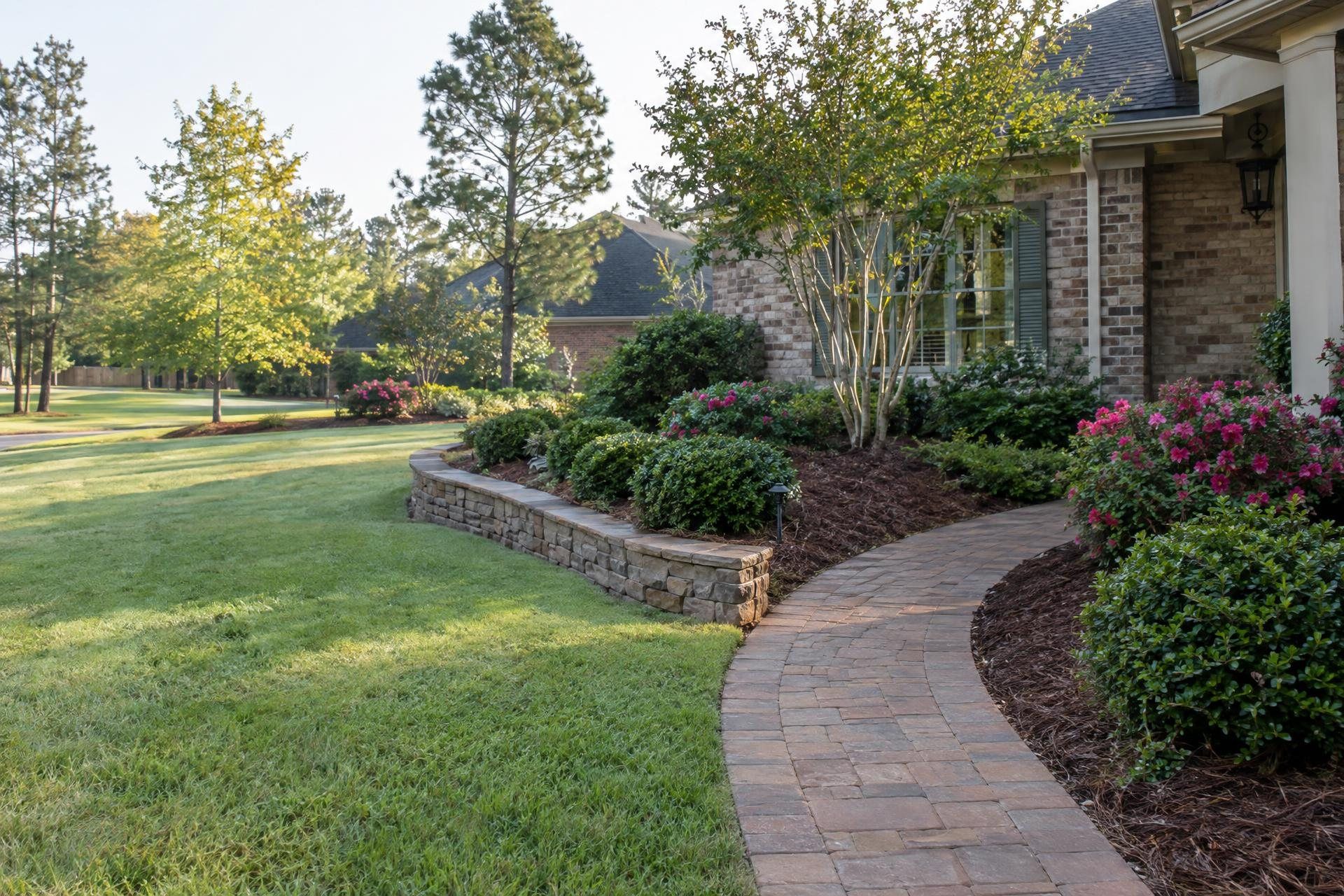
Landscape renovation in Cullman and Morgan Counties, starting with what comes out
Shrubs grown up over the windows, bed lines nobody can find, mulch piled against the brick. Renovation is taking the old landscape out and putting something maintainable back.
- Free estimates
- Licensed and insured
- Same-day service available
- Family owned, out of Falkville
What a renovation takes out before it plants anything
A renovation is not a planting job with a few extra steps. The first part is demolition. Overgrown shrubs get cut and pulled with the root plate, old edging comes up, and the spent mulch and the weed fabric that has knitted itself into the top of the soil have to come off the bed entirely. Until that is out of the way, nobody can tell what the ground under it actually is.
What shows up underneath is usually the reason the old landscape failed. Fabric laid straight over clay with a couple of inches of mulch on top, so every root in the bed has spent its life in those two inches. Soil that has not been opened since the house was built. A bed that falls toward the foundation instead of away from it. Those things get dealt with while the ground is bare, because they are not reachable again once new plants are in.
Then comes the honest part, which is deciding what is worth keeping. A healthy mature tree is worth more than anything you could put in to replace it, so it stays. A row of hollies sheared into cubes for fifteen years is bare inside and will not fill back in, so it goes. We will tell you which is which standing in front of it, before anything is cut.
How a renovation runs on an established yard
Four stages, with the dirty half at the front.
- 01
Mark what stays
We walk the yard with you and sort the planting into three piles: keep, cut back hard, and remove. Estimates are free.
- 02
Strip the beds
The old planting, the edging, the fabric and the spent mulch all have to come off before the ground under them can be dealt with. Ask about where the debris ends up when discussing your estimate, because it changes the job.
- 03
Put the ground right
The clay gets broken open, the bed is graded so water leaves it instead of running at the house, and material is worked in before a single plant goes back.
- 04
Replant and cut the edge
New plants are set at grade and spaced for the size they reach. The bed line is cut back to a shape you can keep, then mulched at an even depth.
Signs the landscape is past what trimming will fix
Any one of these means the yard needs taking apart rather than tidying.
- The shrubs across the front have climbed over the window sills and are bare wood inside.
- You cannot find the line where any bed stops and the grass starts.
- Weed fabric is working up through the mulch and weeds are rooting on top of it anyway.
- Every bed still holds the same three things the builder planted and nothing has changed since.
- Mulch has built up so high against the siding that it is sitting above the brick ledge.
- The house is going on the market and the landscaping is what dates it in the photos.
That last one is worth being blunt about. New planting lifts a tired yard, but if the old landscape also left you a cracked slab or a sunken walk, the hard surfaces are what a visitor sees first. A renovation is the right moment to settle that, because a new paver patio means base material and machines crossing ground that is already torn up.
Who clears the old landscape out
Black Diamond Outdoor Solutions is family owned, locally owned, licensed and insured, working out of Falkville and covering surrounding areas, and twenty years into outdoor work. Renovation is heavier than planting, because an established landscape has to come apart before anything new is worth putting in, and that front half is where the hours go.
Having the whole yard come from one place helps on these jobs more than on new work. Old beds often hid a slope nobody ever dealt with, and holding that bank with a retaining wall goes in the same quote rather than becoming another company’s site visit. Free estimates are available for your landscape renovation.
Renovating tired yards in Cullman and Good Hope
We renovate yards in Cullman, Good Hope, Falkville, Hartselle, West Point, Vinemont and Priceville. A lot of these houses went up in the same stretch of years with the same builder planting out front, which is why so many yards here have the identical row of overgrown shrubs and the identical bed line crept three feet into the grass. The rest of what we plant and build sits under landscaping.
What people ask before renovating a landscape
Can you keep the plants I actually like?
Yes, and we would rather. Anything healthy and in the right place stays, and some things that look finished only need cutting back hard and a season to recover. The ones worth removing are the plants that are bare inside, planted too close to the house, or the wrong size for the spot forever. We mark all of that with you before anything is cut.
What happens to everything that comes out of the beds?
Worth asking about at the visit, because a renovation turns up more material than people expect: root plates, old edging, torn fabric and years of packed mulch. Some of it can be dealt with on site and some of it cannot, and that is a different amount of work depending on the yard. Raise it while we are standing there and it gets settled before the job starts.
What time of year is best for this?
The removal half can be done in any weather we can work in. The replanting half is easier on the plants outside the hottest weeks of summer, because a fresh root ball dries out fast in July heat. If your timing is fixed, we will say so at the quote and plan the watering instructions around it.
How is this different from having new beds installed?
Installation starts with ground that is empty or close to it. Renovation starts with twenty years of somebody else’s decisions in the way, so most of the labor is removal and repairing what is underneath. The planting at the end looks similar. The work to get there is not.
Do you grind the stumps left from the shrubs?
The small ones come out with the root plate when they are pulled. Anything with real wood in it, like an old crepe myrtle clump or a tree that was cut flush years ago, gets ground down below grade so the new bed is not sitting on rotting wood. Point those out on the walk around.
Tell us your town and which beds have gotten away from you for a free estimate.