
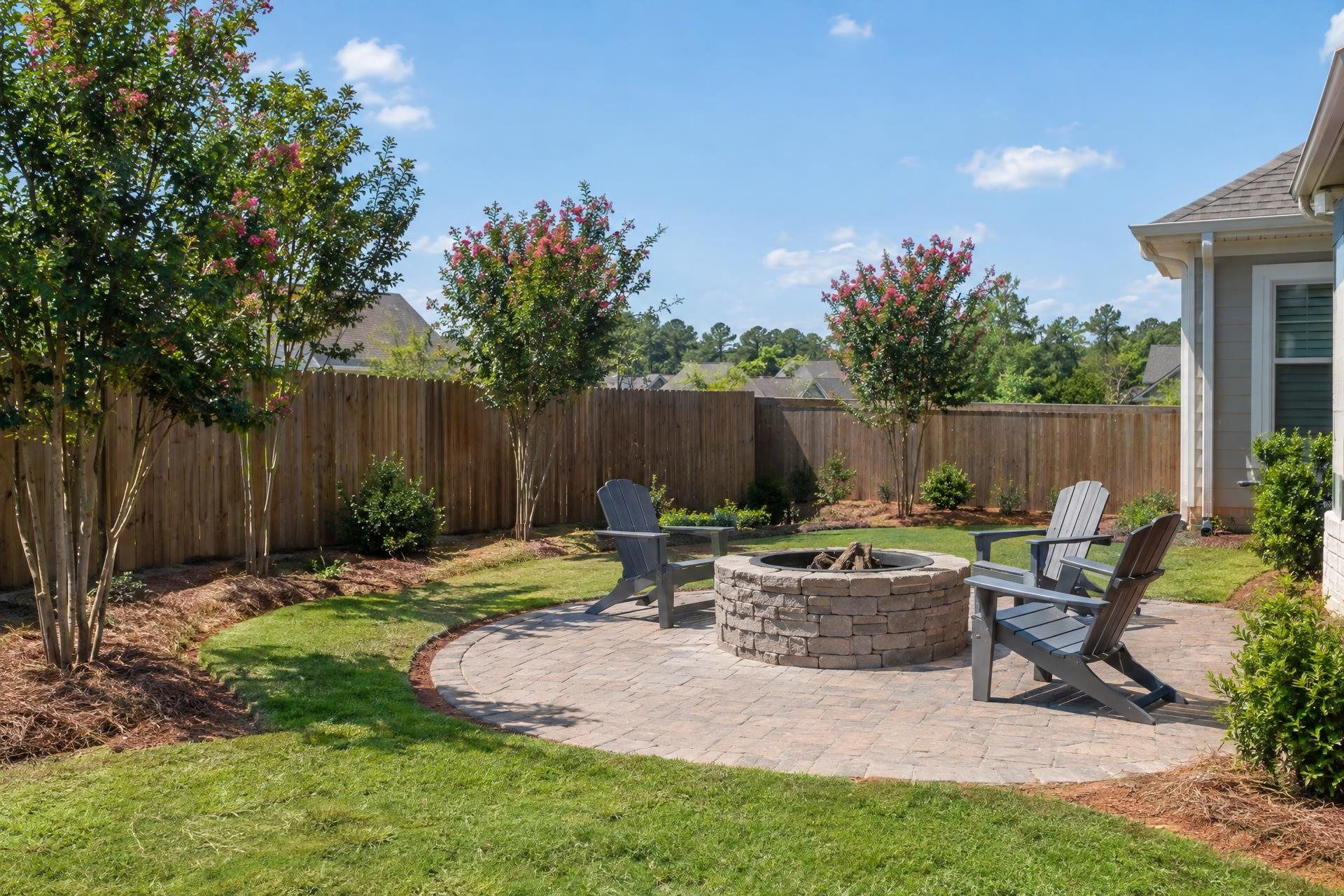
Landscape installation in Cullman and Morgan Counties, planted to actually live
You know what you want the front of the house to look like. This is the part where somebody cuts the beds, opens the clay, sets the plants at the right depth and makes the edge hold.
- Free estimates
- Licensed and insured
- Family owned, out of Falkville
What gets installed on a landscape installation job
Installation is the building half of landscaping. Somebody has already decided what goes where, whether that was you, a builder, a plan on paper or just the way the house asks to be planted. Our part is the shovel work: marking the bed lines, cutting them clean, stripping the grass and roots out, breaking up the subsoil, mixing in material the clay is short of, then setting plants, running edging and finishing with mulch.
Depth is where most planting goes wrong. A shrub set too deep suffocates slowly and nobody connects the dead plant two summers later to the day it went in. A root ball left proud of the grade dries out in the first stretch of real heat. We set the top of the root ball level with the finished soil, tease the roots loose at the sides so they leave the ball instead of circling it, and water the hole in as it is backfilled so the air pockets close.
On a lot around here the limiting factor is almost always the clay. Dig a neat hole in packed red clay, drop a plant in it and backfill with bagged soil and you have built a bucket. It fills in a wet February and the roots sit in standing water. So beds get opened wider than the plant, the sides get scuffed rather than left slick, and we pay attention to where water leaves the bed, not just where it enters it.
How we install a bed from the mark to the mulch
Four stages, and the first one is a free estimate.
- 01
Walk it and mark it
We come out, look at the spot and lay the bed lines down on the ground so you can see the shape before it is cut. Free estimates.
- 02
Cut and strip the beds
The line gets cut and the sod and roots come out, so the bed starts clean instead of grass growing back up through new mulch. This is the step that makes the edge look intentional.
- 03
Open and amend the soil
The subsoil gets broken rather than smoothed, and material is worked in so the bed drains and holds moisture instead of doing one or the other.
- 04
Set, edge and mulch
Plants go in at grade, spaced for the size they grow to and not the size on the trailer. Then edging, then mulch at an even depth, kept off the trunks.
When a yard is ready for landscape installation
These are the conditions that put people on the phone about planting.
- The house is new and the builder left you graded dirt, a mailbox and nothing else.
- The front beds hold two surviving shrubs out of six and the gaps are obvious from the road.
- You bought plants on a Saturday, they are still in their pots by the garage, and the clay beat you.
- The bed edge has crept into the lawn so far that you cannot find the original line.
- There is a strip along the house where nothing has ever grown and it is always the first thing you see.
- You are selling in the spring and the front of the house is the cheapest thing left to fix.
New construction is the most common of these. On a fresh lot it is usually worth settling the whole yard at once, because the grading, the beds and the lawn all touch each other: the same visit can handle the beds and the sod installation, and the heavy work gets done before anything is in the way.
Who shows up to plant it
Black Diamond Outdoor Solutions is family owned, locally owned, licensed and insured, working out of Falkville and covering surrounding areas, and twenty years into outdoor work. Planting is one piece of a longer list that also covers lawn care, sod, land grading and dirt work, so the preparation a bed needs is familiar ground rather than something bolted on.
If the bed line is where a patio or a wall is also going, the smart move is to quote it together. Stone and plants installed in the right order means nothing freshly planted gets driven over, and a bed that sits against a paver patio or above a retaining wall gets built with that edge already accounted for. Free estimates.
Where we install landscaping around Cullman and Morgan Counties
Our map takes in Cullman and we also plant in Falkville, Hartselle, Good Hope, West Point, Vinemont and Priceville. Lots here run from in town half acres to several acres on a county road, and the same bed is a shaded strip against a brick ranch in one and a full sun bank facing a pasture in the next. That changes what should be planted in it, and that conversation is worth having before the plants are bought rather than after. More of this work sits under our general landscaping services.
What people ask before they have beds installed
Do you supply the plants or do I?
Either way is workable. Plant material from a nursery lot goes in the ground the same way whoever paid for it, so what matters more is the condition it arrives in: a root ball that has sat drying on a driveway for a week starts behind. If you would rather not do the buying, raise it at the visit and ask how the plant material can be handled, so it is settled before the quote is put together rather than afterwards.
How far apart should the plants go?
For the size they reach, not the size they are in the pot. The usual mistake is planting on pot spacing, which looks full the first season and crowded by the third, at which point everything is competing and half of it has to come out. We space for mature size and fill the gaps with mulch in the meantime.
Will the new plants need watering after you leave?
Yes, and this is the one job the homeowner has to own. Newly set roots are still inside the ball they came in, so they dry out faster than established plants do. Water deeply and less often rather than a light sprinkle daily, so the moisture reaches the bottom of the ball instead of sitting on the surface. Push a finger into the soil at the edge of the ball to check: damp means wait, dry a couple of inches down means water.
Can you plant in the heat of summer?
It can be done, and it is harder on the plant. Everything comes down to watering, because a root ball in July loses moisture fast. If your timeline is flexible, planting outside the hottest weeks gives the plant an easier start. If it is not flexible, we will say so at the quote and plan the watering around it.
What happens to the old shrubs and the dirt that comes out?
Settle that at the estimate rather than on the day. A bed cut into clay produces more sod and spoil than people picture, and old shrubs take up room on a trailer. Ask for removal to be priced in the quote if you want it gone, and say so if you would rather keep the spoil on site to fill a low spot somewhere else on the property.
Tell us your town and which part of the yard needs planting. Free estimates.